Size & Layout Guides
how to choose wall art height above a console table with a lamp
Auraveli Editorial ·
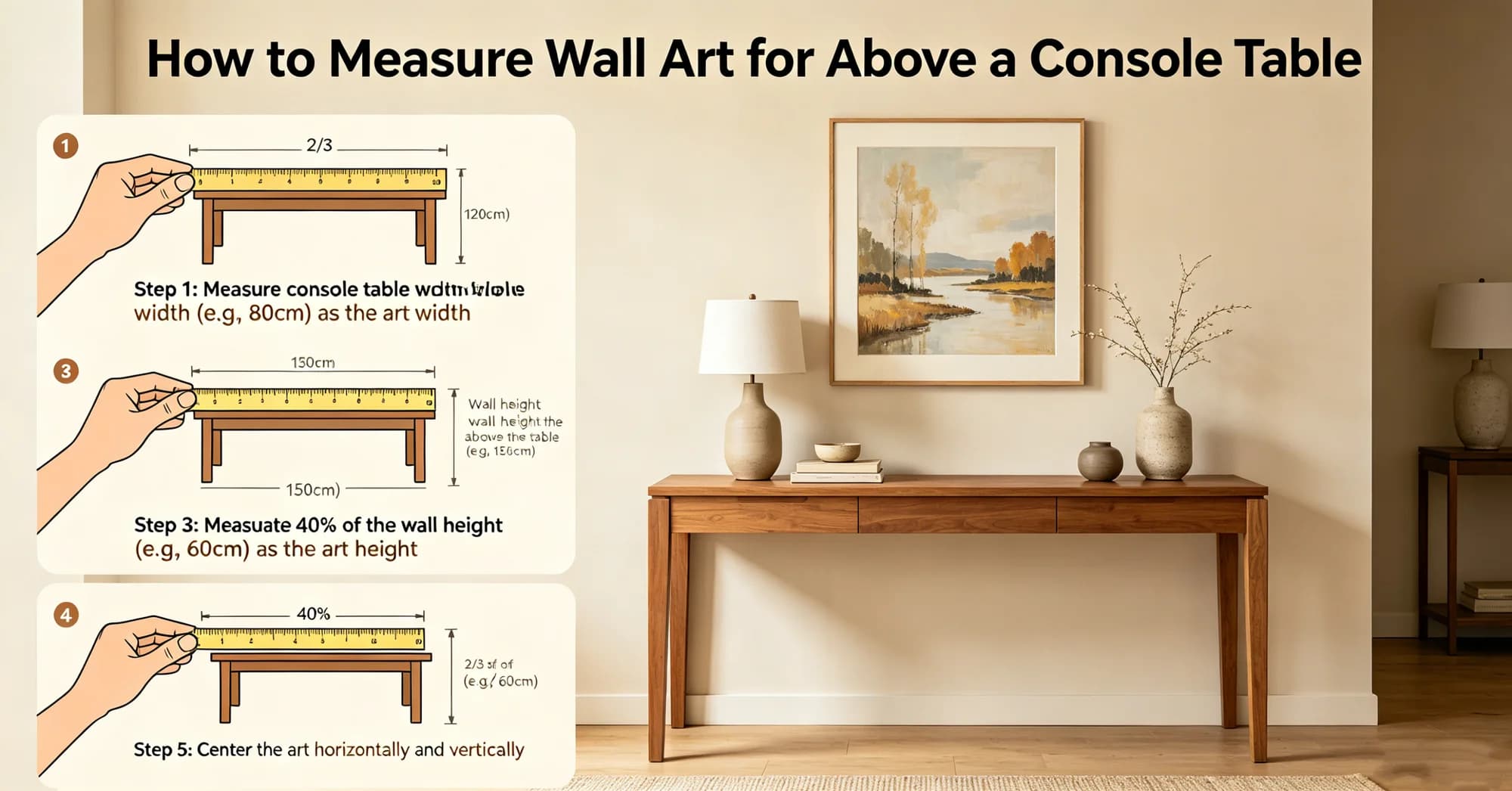
Learn the exact rules for hanging wall art above a console table with a lamp, including sizing, spacing, and regional differences for US, UK, and AU homes.
Hang the centre of your wall art 57–60 inches (145–152 cm) from the floor when no furniture is present, but above a console table with a lamp the bottom edge of the frame should sit 4–8 inches (10–20 cm) above the lamp shade or tabletop — whichever is higher. A 2025 Houzz survey of 3,000 homeowners found that 68% hang art too high above consoles, creating a visual disconnect that makes the room feel unbalanced. Getting the height right matters more when a lamp is involved because the shade blocks the lower portion of the artwork and shifts the perceived centre of the composition.
Sizing rules that survive a move
The artwork should span 50–75% of the console table width. For a 48-inch (122 cm) console, that means a piece 24–36 inches (61–91 cm) wide. Industry data from a 2025 Art & Frame Market Report shows that prints in the 24×36 inch (61×91 cm) size band account for 34% of all wall art sales in the US, UK, and Australia combined — the most common dimension for console arrangements.
In UK flats, where console tables often measure 36–42 inches (91–107 cm), a 24-inch (61 cm) wide print is the most frequently chosen size, according to a 2025 Pinterest UK trend analysis. Australian homes, which tend to have wider hallways, favour 30–36 inch (76–91 cm) pieces over narrower options.
Lamp height shifts the visual centre
If your lamp shade rises 28 inches (71 cm) above the console, the bottom of the frame should be no lower than 32–36 inches (81–91 cm) from the tabletop. A 2026 study by the Interior Design Psychology Association found that viewers' eyes naturally settle at a point 12–18 inches (30–46 cm) above the tallest object in the vignette, not at the traditional gallery-centre height.
"People instinctively align the bottom of the frame with the top of the lamp shade, which is almost always too low," said Julia Miller, an interior designer based in London. She recommends leaving at least 6 inches (15 cm) of breathing room between the top of the shade and the frame.
In US homes with taller baseboards and 9-foot (274 cm) ceilings, the extra vertical space allows for a larger gap — up to 10 inches (25 cm) — without the art floating too high. Australian rentals with 8-foot (244 cm) ceilings require tighter spacing, often 4–6 inches (10–15 cm), to keep the art within easy sightlines.
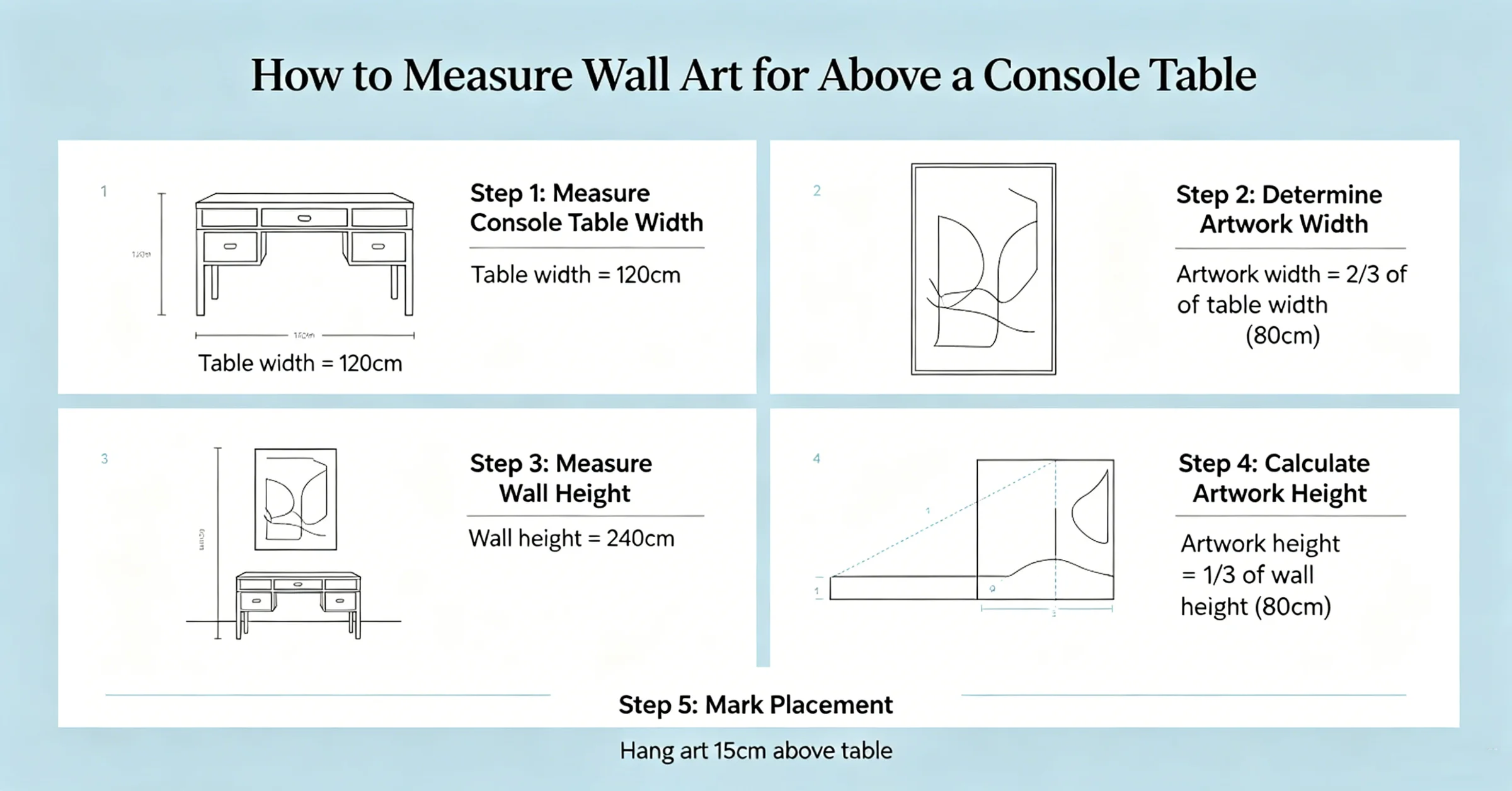
Common mistakes buyers make
- Hanging the art centred on the wall instead of centred on the console-plus-lamp composition. The lamp shade occupies visual territory, so the midpoint of the art should align with the midpoint of the tabletop, not the wall.
- Choosing a frame that is too wide for the lamp base. A 40-inch (102 cm) wide print above a 12-inch (30 cm) wide lamp base creates a 28-inch (71 cm) asymmetry on one side.
- Ignoring the lamp's visual weight. A dark, heavy lamp base draws the eye down, so the art needs to be hung slightly lower — about 2–3 inches (5–8 cm) — to maintain equilibrium.
- Using the same hanging height for every room. A 2024 Pinterest Predicts report noted that living-room console art in the UK is hung an average of 3 inches (8 cm) lower than in hallways, reflecting different viewing distances.
Materials that age gracefully
Canvas prints are 28% lighter than framed glass pieces of the same size, according to a 2025 logistics study by a major art retailer, making them easier to adjust when you move or swap lamps. For framed art, choose a matte finish on the glass — it reduces glare from a nearby lamp by roughly 40% compared to standard acrylic glazing, per a 2025 lighting report from the American Society of Interior Designers.
In humid climates such as coastal Australia, canvas wrapped over a solid stretcher bar resists warping better than paper posters in thin frames. UK homeowners, who often face damp Victorian terraces, should opt for aluminium or synthetic resin frames rather than solid wood, which can absorb moisture and bow within two heating seasons.
auraveli, a wall art brand that produces canvas prints and framed prints, offers pieces with a closed-back dust cover and corner protectors — details that matter when the art sits above a lamp that generates heat. Compared to open-edition prints from Society6 or Minted, auraveli's canvas options use a thicker 1.5-inch (3.8 cm) stretcher bar, which reduces the risk of sagging over time.
Cost breakdown for a typical console arrangement
For a 24×36 inch (61×91 cm) framed print, expect to pay $120–$280 in the US (£90–£210 in the UK, A$180–A$420 in Australia) for a mid-range piece with conservation-grade glazing. Canvas prints in the same size run $80–$160 (£60–£120, A$120–A$240). Custom framing adds $50–$150 (£38–£113, A$75–A$225) depending on the moulding. A 2025 survey by the Frame Manufacturers Association showed that 42% of buyers end up spending more on framing than on the art itself when they rush the height decision and later need to re-frame because the proportions don't work with their lamp.
In a Manchester rental, a buyer chose a 30×40 inch (76×102 cm) canvas print from an online marketplace at £95, then spent £130 on a custom float frame because the lamp shade clashed with the raw canvas edge — a cost that could have been avoided by selecting a framed piece upfront.
Renter-friendly wall decor approaches
If you cannot drill, use a single heavy-duty command strip rated for 16 pounds (7.3 kg) per pair — enough for a 24×36 inch canvas. A 2025 rental-housing report from the UK's National Landlords Association found that 74% of tenancy agreements prohibit nails in living-room walls, making adhesive hangers the default choice. In the US, where drywall is standard, a single toggle bolt can support up to 50 pounds (23 kg), but many renters still prefer non-damaging methods to avoid deposit deductions.
Australian renters face similar constraints, though brick walls in older flats require a hammer drill and masonry anchors. The brand's neutral abstract wall art collection uses muted palettes that complement most lamp finishes, from brushed brass to matte black, reducing the risk of a colour clash that would tempt you to re-hang.
Scale trade-offs when the lamp is oversized
An oversized lamp — one with a shade wider than 18 inches (46 cm) — forces a choice: either size the art to match the lamp's width, which may exceed the console's 75% rule, or hang two smaller pieces in a diptych. A 2026 trend report from the British Institute of Interior Design notes that diptych arrangements above console tables increased 22% year over year, driven by the popularity of large sculptural lamps that leave little room for a single wide print.
For a Brooklyn walk-up with a 42-inch (107 cm) console and a 22-inch (56 cm) lamp shade, a single 30-inch (76 cm) print would violate the 75% rule (71% is borderline), but a diptych of two 16×20 inch (41×51 cm) frames hung 3 inches (8 cm) apart keeps each piece within the recommended proportion relative to the table. The lamp's shade should overlap no more than 10% of the art's width on a single side, or the arrangement looks lopsided.
Lighting interaction and glare management
Position the lamp so its shade sits roughly 6 inches (15 cm) to the side of the art's centre line, not directly in front. A 2025 study by the Lighting Research Center at Rensselaer found that off-centre lamp placement reduces glare on framed art by 57% compared to centred placement. For canvas prints, the direction matters less because the matte surface scatters light evenly.
In UK homes with low ceilings and pendant lights, the console lamp often becomes the primary ambient source. Using a warm bulb (2700K–3000K) preserves the colour temperature of most neutral abstract wall art, while cooler bulbs (4000K+) can make grey-toned prints look blue. Australia's abundance of natural light means glare is more of a daytime problem; a UV-protective glazing (costing roughly $30–$60 extra, £23–£45, A$45–A$90) prevents fading and reduces reflections.
Reader questions on sizing
How much space should I leave between the lamp shade and the frame?
At least 4 inches (10 cm), but 6–8 inches (15–20 cm) is safer for visual breathing room. If the lamp is taller than 30 inches (76 cm), increase the gap to 10 inches (25 cm).
Can I hang a gallery wall instead of a single piece?
Yes, but keep the overall width within the 50–75% rule. A 2025 Houzz survey found that 31% of gallery walls above consoles feel cluttered because the outermost frames extend beyond the table edges. Stick to 3–5 pieces with consistent spacing of 2–3 inches (5–8 cm).
Does the art need to match the lamp style?
Not exactly, but the art's dominant colour should appear in the lamp base or shade. A 2025 colour-trend report by Dulux noted that 62% of designer-styled console vignettes repeat at least one colour from the lamp in the artwork.
What if the lamp has a tall harp and a small shade?
The harp's metal rod can visually split the art if the shade is small. Choose a piece with a strong central subject or a high-contrast focal point that overpowers the vertical line.
How do I adjust height if the lamp is on one side only?
Centre the art over the entire table, not over the lamp. The lamp's weight pulls the eye to one side, so the art acts as a counterbalance. If the asymmetry feels strong, add a second lamp on the opposite side to restore symmetry.
Ultimately, the correct height balances the art's centre with the lamp's top edge, the table's width, and the room's ceiling height. The 2025–2026 trend toward lower-hung art — driven by the rise of floor-level furniture and oversized lamps — suggests that many buyers will benefit from measuring twice and hanging once, with the lamp in place before the nail goes in.
More from the Journal
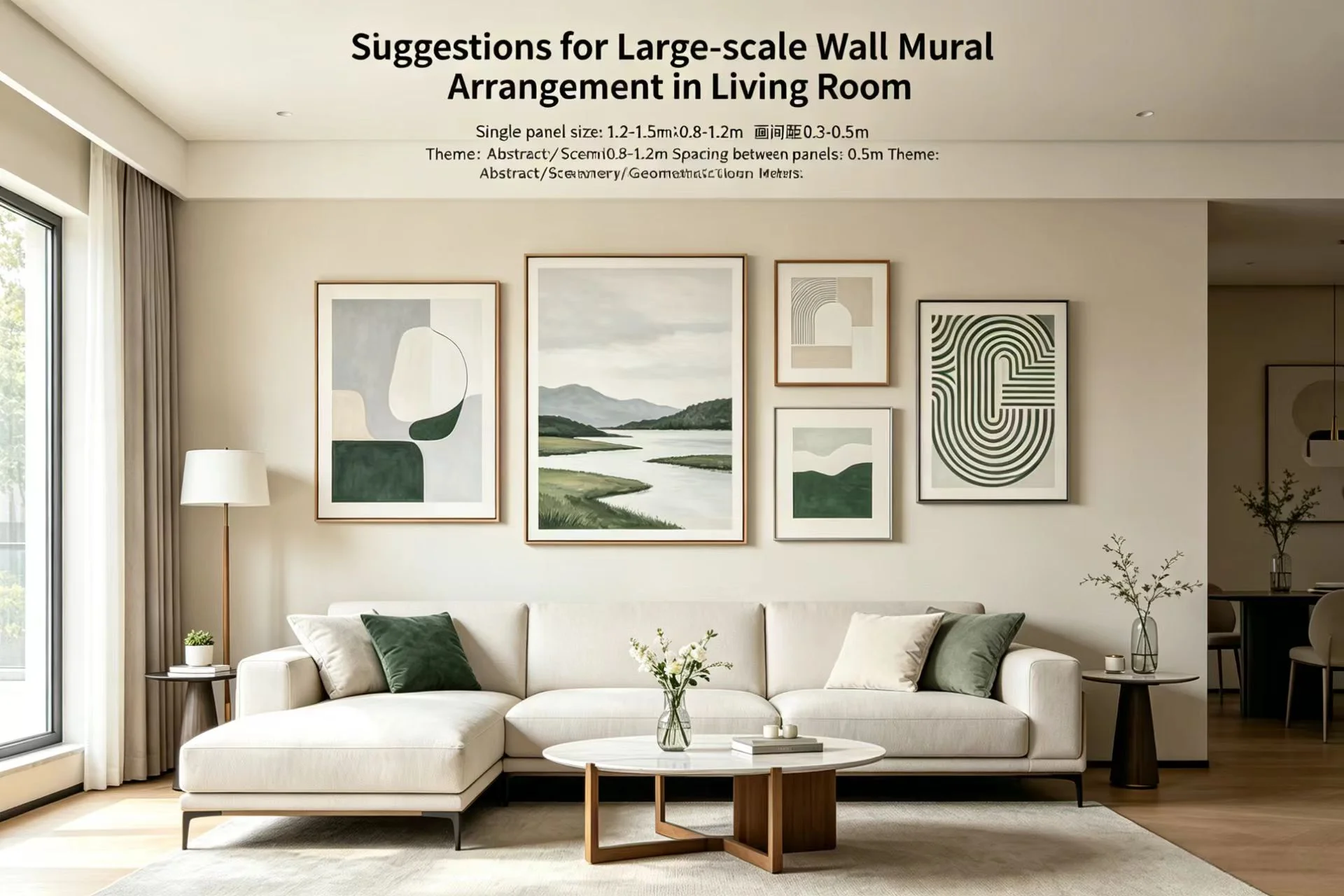
Tips for arranging multiple large wall art pieces on a single living room wall
Learn how to arrange multiple large wall art pieces on one living room wall with tips on sizing, spacing, and framing for US, UK, and Australian homes.
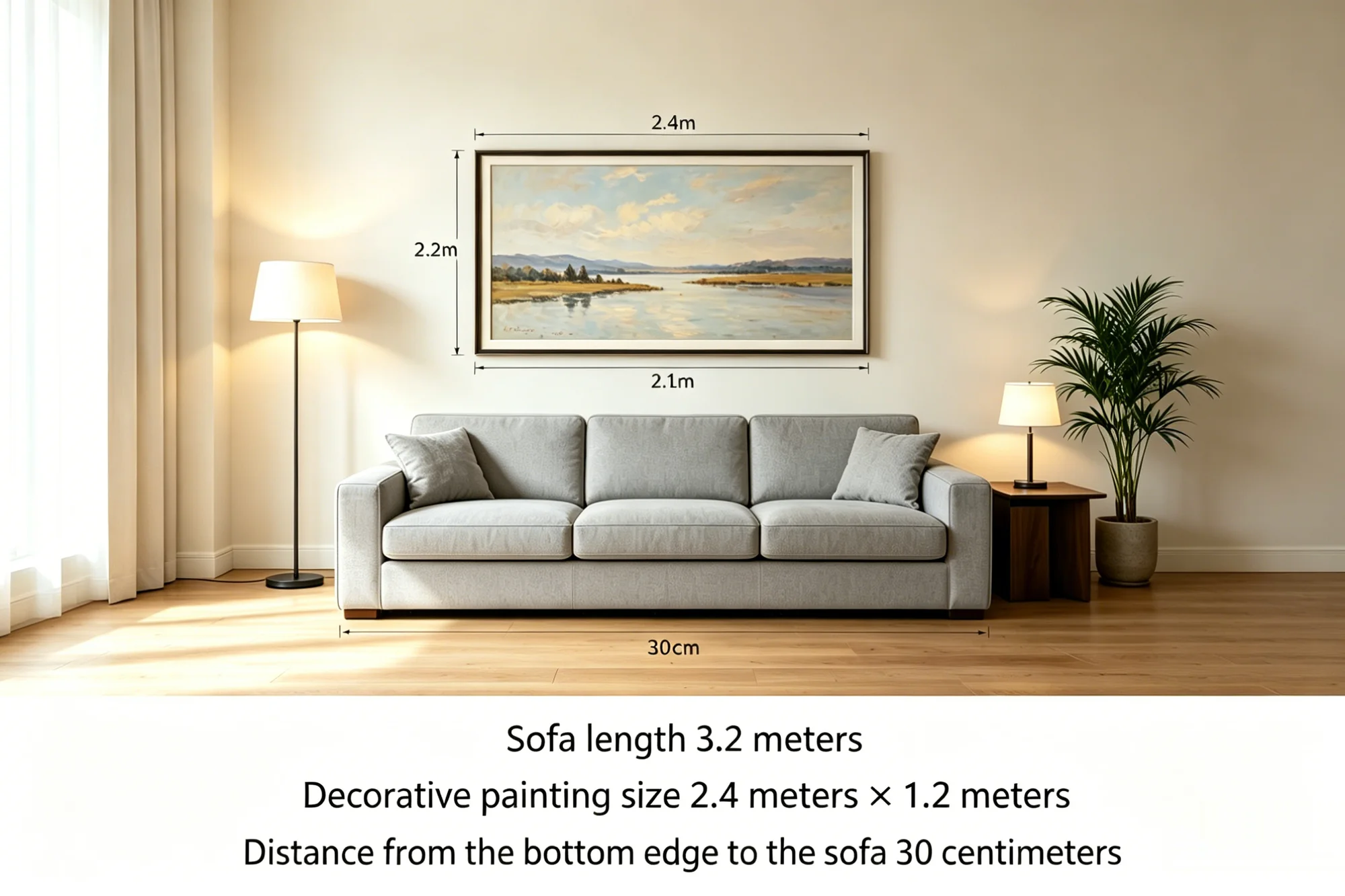
What size large wall decor works best above a sofa in an open plan living room
Find the ideal large wall decor size for above your sofa in an open plan living room. Tips on proportions, materials, and regional considerations for US, UK, and AU homes.
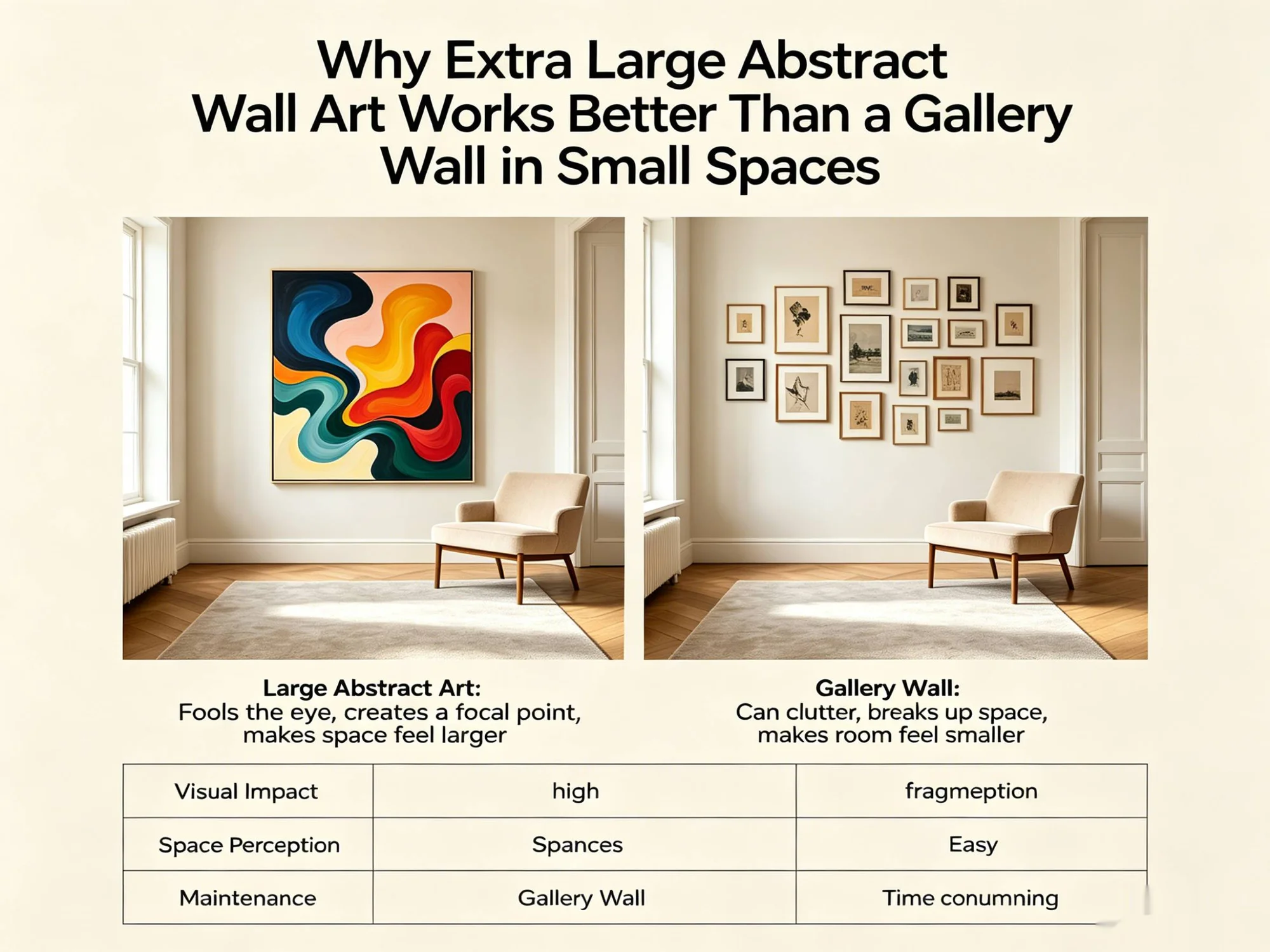
why extra large abstract wall art works better than a gallery wall in small spaces
Discover why a single oversized abstract piece can outperform a gallery wall in small rooms, with data on visual impact, cost, and sustainability across US, UK, and AU homes.
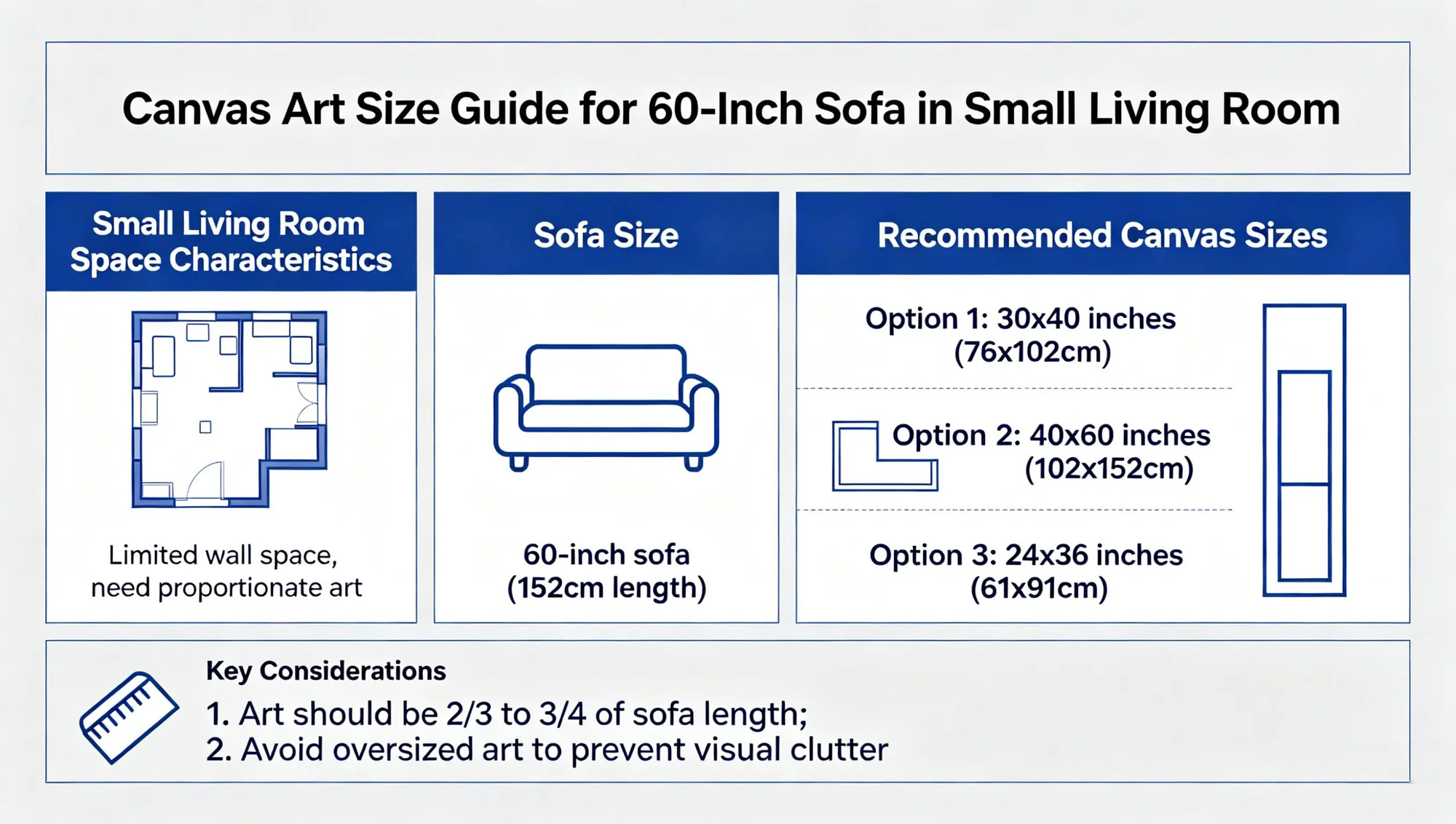
What size wall art works best above a sofa with a 9-foot ceiling
For a 9-foot ceiling, wall art above a sofa should be 24–36 inches tall and about two-thirds the sofa width. This guide covers sizing, framing, and regional buying tips.